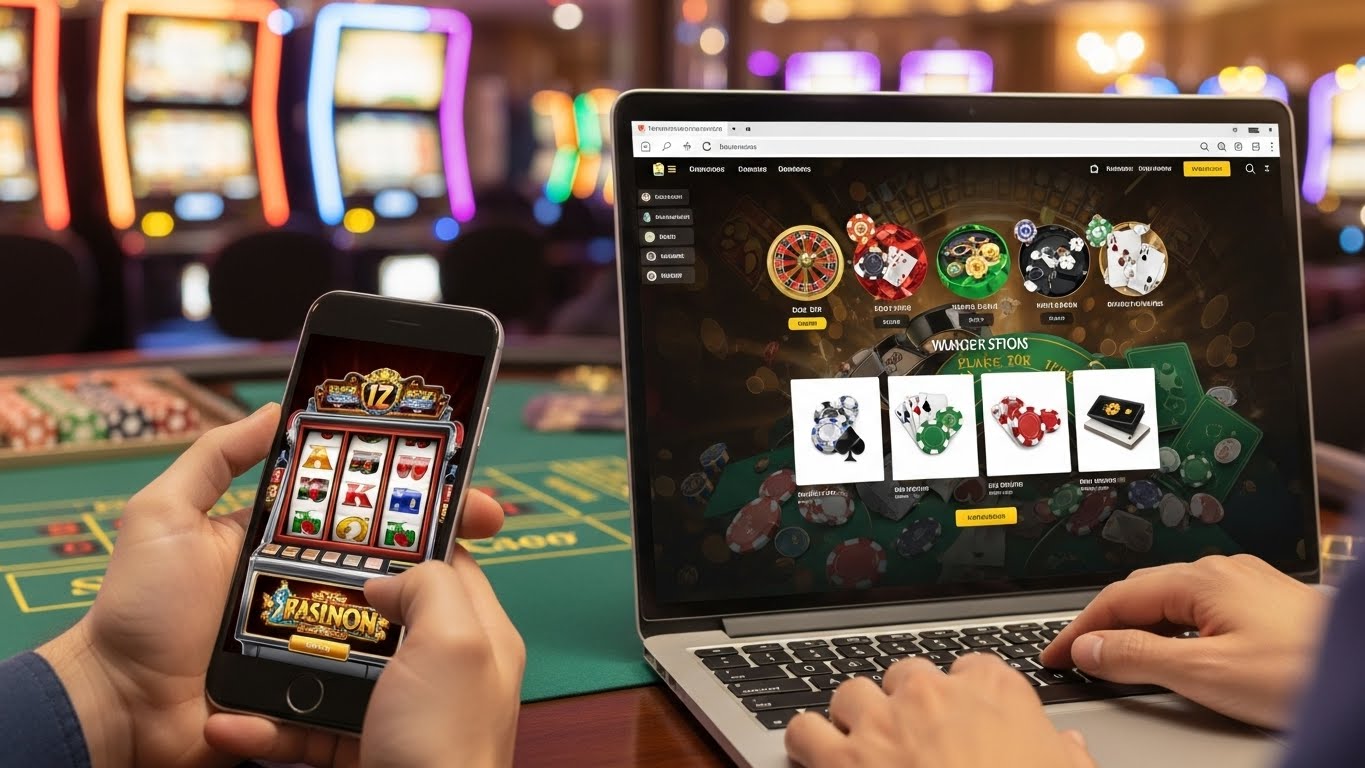
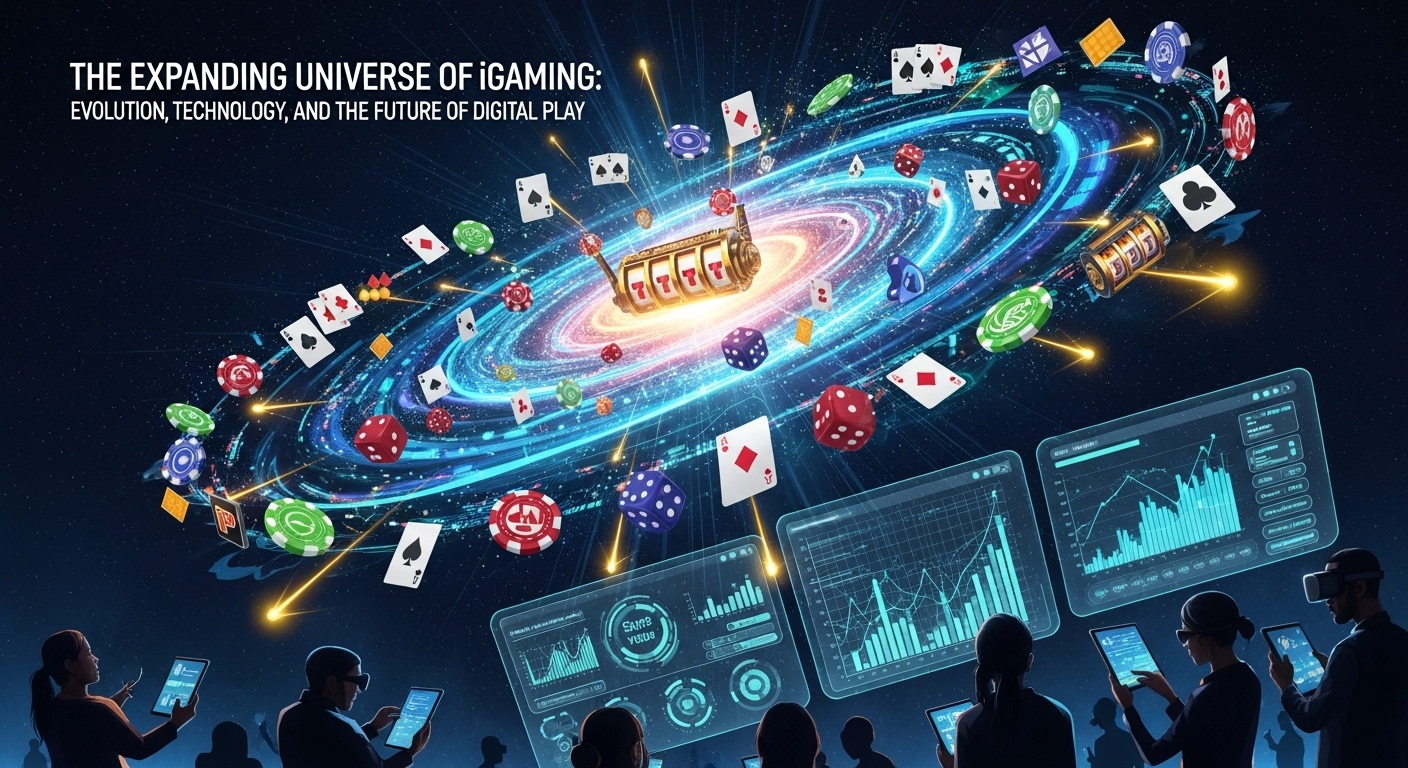
The world of gaming has transformed beyond imagination over the past two decades. What was once confined to consoles, arcades, and desktop computers has now evolved into an expansive digital ecosystem. Among the most vibrant sectors within this global digital entertainment revolution is iGaming — a term that encompasses all forms of online wagering and interactive betting, from online casinos and poker rooms to sports betting and eSports tournaments.
iGaming has become not just a pastime but a powerful industry reshaping economies, regulations, and even the way people interact with technology. This blog explores the origins, growth, technologies, regulations, trends, and the fascinating future of the iGaming world.
Understanding iGaming: What It Really Means
The word iGaming stands for “interactive gaming,” but in modern usage, it typically refers to online gambling activities. This includes any game of chance or skill played for money over the internet. The term covers a wide range of activities:
- Online casinos with slot machines, roulette, blackjack, and baccarat
- Online poker rooms where players compete in virtual tournaments
- Sports betting platforms where wagers are placed on real-world sporting events
- Fantasy sports contests that simulate team management and competition
- Lottery, bingo, and instant-win games available digitally
What makes iGaming unique is its interactivity and accessibility. Players can now experience the thrill of gambling from the comfort of their homes or mobile devices. The iGaming ecosystem combines entertainment, competition, and real monetary stakes — all powered by advanced technology.
The Origins of iGaming: From Basic Websites to Virtual Worlds
The roots of iGaming trace back to the mid-1990s, when the internet began its commercial rise. In 1994, the Caribbean nation of Antigua and Barbuda passed the Free Trade and Processing Act, allowing companies to apply for licenses to operate online casinos.
Shortly after, the first true online casino was launched. It offered a handful of basic games, running on slow connections and rudimentary graphics. Yet, this small beginning marked the birth of a multi-billion-dollar industry.
By the early 2000s, as internet access expanded globally, more players joined in. Developers introduced better graphics, sound effects, and more immersive gameplay. Payment processors also began to support secure online transactions, which boosted trust and participation.
As broadband speeds increased, the quality of online casino experiences dramatically improved. Players no longer had to deal with slow-loading pages or limited game options. The industry exploded into one of the fastest-growing entertainment sectors in the digital economy.
The Rise of Online Casinos and Digital Betting
The early 2010s marked the true explosion of the iGaming era. With smartphones becoming widely available, gaming shifted from desktops to mobile devices. Suddenly, anyone could spin a slot reel or place a sports bet within seconds.
Mobile gaming transformed user engagement. Instead of waiting to reach a computer, people could play during commutes, lunch breaks, or even while watching live sports.
At the same time, live dealer games revolutionized online casinos. Through high-quality streaming technology, players could now interact with real dealers in real time, creating an authentic casino experience.
In parallel, sports betting went digital. The ability to place wagers in real time during matches, track odds instantly, and access analytical tools reshaped how fans experienced sports. The fusion of sports fandom and interactive betting became a new form of entertainment — blending passion, competition, and profit.
The Role of Technology in Shaping iGaming
The evolution of iGaming would not have been possible without technological innovation. Behind every seamless spin of a slot or every virtual card dealt lies a complex network of software, servers, and algorithms.
1. Software Providers and Game Development
Companies such as Microgaming, NetEnt, and Playtech pioneered the modern iGaming experience by creating reliable, visually appealing, and fair gaming software. The backbone of every online casino is its Random Number Generator (RNG), ensuring that outcomes are completely random and transparent.
2. Mobile Technology
The shift from desktop to mobile reshaped the industry’s direction. Developers began to create responsive designs and mobile-optimized games, ensuring players could enjoy the same experience regardless of their device. Today, mobile users account for the majority of iGaming traffic.
3. Artificial Intelligence and Data Analytics
AI has become a cornerstone of personalization in iGaming. It powers recommendation systems, detects fraud, and supports customer service chatbots. Data analytics, meanwhile, allows operators to understand player behavior, optimize game offerings, and enhance retention.
4. Blockchain and Cryptocurrencies
Blockchain introduced transparency to the gaming world. It enables provably fair gaming, where players can verify that outcomes are not manipulated. Cryptocurrencies like Bitcoin and Ethereum also made deposits and withdrawals faster, cheaper, and more secure — attracting a tech-savvy audience.
5. Virtual Reality and Augmented Reality
The next frontier of iGaming is immersion. Virtual Reality (VR) casinos already allow players to walk through digital gaming halls, pick tables, and interact with others as avatars. Augmented Reality (AR) adds another layer by blending real and digital environments, offering a futuristic twist to classic gaming.
The Global Reach of iGaming
Today, iGaming is a global phenomenon spanning continents and cultures. Europe has been the dominant market, with countries like the United Kingdom, Malta, and Sweden establishing clear regulations and licensing systems. The United States, after decades of restrictions, has recently opened up state-by-state, creating massive opportunities.
Asia and Latin America are also experiencing rapid growth as internet access and smartphone adoption increase. Each region presents unique challenges — from differing regulations to payment preferences and cultural attitudes toward gambling.
Nevertheless, one unifying trend stands out: digital convenience. Players across the world are drawn to the ease of access, variety of options, and engaging interfaces that iGaming provides.
The Business Side: How iGaming Generates Revenue
The iGaming industry’s profitability is built on a combination of volume, engagement, and innovation. Operators generate revenue through:
- House Edge: Every game has a built-in mathematical advantage favoring the house, ensuring long-term profitability.
- Commissions and Fees: Poker rooms and betting exchanges charge small percentages on each transaction.
- In-Game Purchases and Promotions: Players often buy tokens, credits, or enter tournaments, boosting operator income.
- Affiliate Marketing: Websites and influencers promote platforms in exchange for revenue shares, expanding user acquisition.
Behind the scenes, advanced analytics tools help companies track metrics like player retention, average revenue per user, and session duration — allowing them to optimize profitability while maintaining responsible gaming practices.
Responsible Gaming: Balancing Fun and Safety
One of the most important aspects of iGaming’s evolution is the growing emphasis on responsible gambling. With accessibility comes responsibility.
Operators are required to implement tools and safeguards that help prevent problem gambling. These include:
- Self-exclusion programs
- Deposit and spending limits
- Reality checks that remind players of time spent
- AI-powered systems to detect risky behavior patterns
Regulators worldwide have also introduced strict frameworks to ensure player safety, fair play, and data privacy. The modern iGaming industry is increasingly driven by ethics as much as profits.
The Regulatory Landscape: A Complex Global Framework
Regulation is both the backbone and the biggest challenge of iGaming. Since gambling laws vary by country and even by region, operators must navigate a complex legal environment.
In well-regulated markets like the UK, operators must hold licenses from the UK Gambling Commission, which enforces rules on fairness, transparency, and advertising. In Malta, the Malta Gaming Authority (MGA) provides one of the most respected licenses globally, ensuring international standards.
Other jurisdictions, such as Curacao and Gibraltar, have become popular for their flexible licensing processes, attracting startups and established brands alike.
In contrast, some countries have strict or even prohibitive regulations. However, the overall global trend is toward legalization and structured oversight, as governments recognize the economic benefits of a regulated iGaming market.
The Impact of iGaming on the Economy
iGaming is no longer just entertainment — it’s a significant economic contributor. The industry creates jobs for software developers, designers, customer support teams, and marketing specialists. It also generates billions in tax revenues for governments and sponsorship opportunities for sports teams.
Moreover, the rise of affiliate marketing, influencer partnerships, and eSports collaborations has created entirely new career paths. The ripple effect of iGaming reaches beyond the casino — into technology, advertising, and digital finance.
iGaming and the Rise of eSports Betting
One of the most exciting developments in iGaming is the intersection with eSports — competitive video gaming. Titles like League of Legends, Counter-Strike, and Dota 2 attract millions of viewers worldwide. Betting on these events has become a booming market within iGaming.
The appeal of eSports betting lies in its youth-driven audience, data-rich nature, and fast-paced action. Unlike traditional sports, eSports events can be held year-round and feature global participation.
This synergy between digital gaming and betting highlights how iGaming continues to evolve with modern entertainment trends.
The Psychology of iGaming: Why It’s So Engaging
The success of iGaming isn’t just about money — it’s rooted in human psychology. Players are drawn to the excitement of chance, the satisfaction of small wins, and the immersive escape from routine.
Designers leverage gamification techniques — such as progress bars, rewards, achievements, and leaderboards — to keep users engaged. These psychological triggers make iGaming both entertaining and habit-forming, emphasizing the need for responsible usage.
Emerging Trends in iGaming
The next decade promises even greater transformation. Some of the most promising trends include:
1. Artificial Intelligence-Powered Personalization
Games will adapt in real time to individual player behavior, offering customized experiences and recommendations.
2. Virtual Reality Casinos
VR will allow users to explore 3D environments, interact with others, and enjoy a full sensory casino experience.
3. Social iGaming
The future of iGaming is not solitary but social. Chat rooms, multiplayer features, and interactive tournaments will make online gambling more community-oriented.
4. Cryptocurrency Integration
Digital currencies will continue to play a major role, making transactions faster, anonymous, and more global.
5. Regulation and Transparency
Governments and organizations are likely to tighten rules around fairness, advertising, and data protection, leading to a safer and more credible industry.
The Challenges Facing the iGaming Industry
Despite its growth, iGaming faces several challenges. Regulatory uncertainty remains a major hurdle, with different countries adopting conflicting laws. Payment restrictions, cybersecurity risks, and the ongoing stigma surrounding gambling also pose obstacles.
Another critical challenge is player protection. As technology makes iGaming more immersive, the line between entertainment and addiction can blur. Responsible operators must balance innovation with safety.
The Future of iGaming: Merging Entertainment, Technology, and Trust
Looking ahead, the iGaming industry is poised for even greater expansion. The combination of advanced technologies, global connectivity, and evolving consumer expectations will push it into new frontiers.
We can expect a future where iGaming merges seamlessly with mainstream entertainment — from integrated streaming experiences to augmented reality casinos. The boundaries between gaming, social media, and live entertainment will continue to blur.
Most importantly, the future of iGaming will be shaped by trust. Operators who prioritize transparency, fairness, and user protection will lead the next generation of interactive gaming.
Conclusion: iGaming as the Digital Entertainment Powerhouse
What began as a handful of simple online games in the 1990s has grown into a vast digital empire that spans the globe. The iGaming industry embodies the perfect mix of technology, psychology, and innovation — offering millions of people not just a way to play, but a way to connect, compete, and experience excitement in a new dimension.
As regulations mature and technologies evolve, iGaming will continue to redefine the boundaries of entertainment. It is not merely a trend; it’s a transformation — a reflection of how the digital age is reshaping human behavior, leisure, and opportunity.
In the years ahead, iGaming will likely become even more immersive, secure, and socially integrated. From VR casinos to blockchain transparency, from AI-driven personalization to global tournaments, the possibilities are endless.
The future of iGaming is not just about winning or losing — it’s about the journey, the innovation, and the experience of being part of a world where technology and play coexist in perfect harmony.