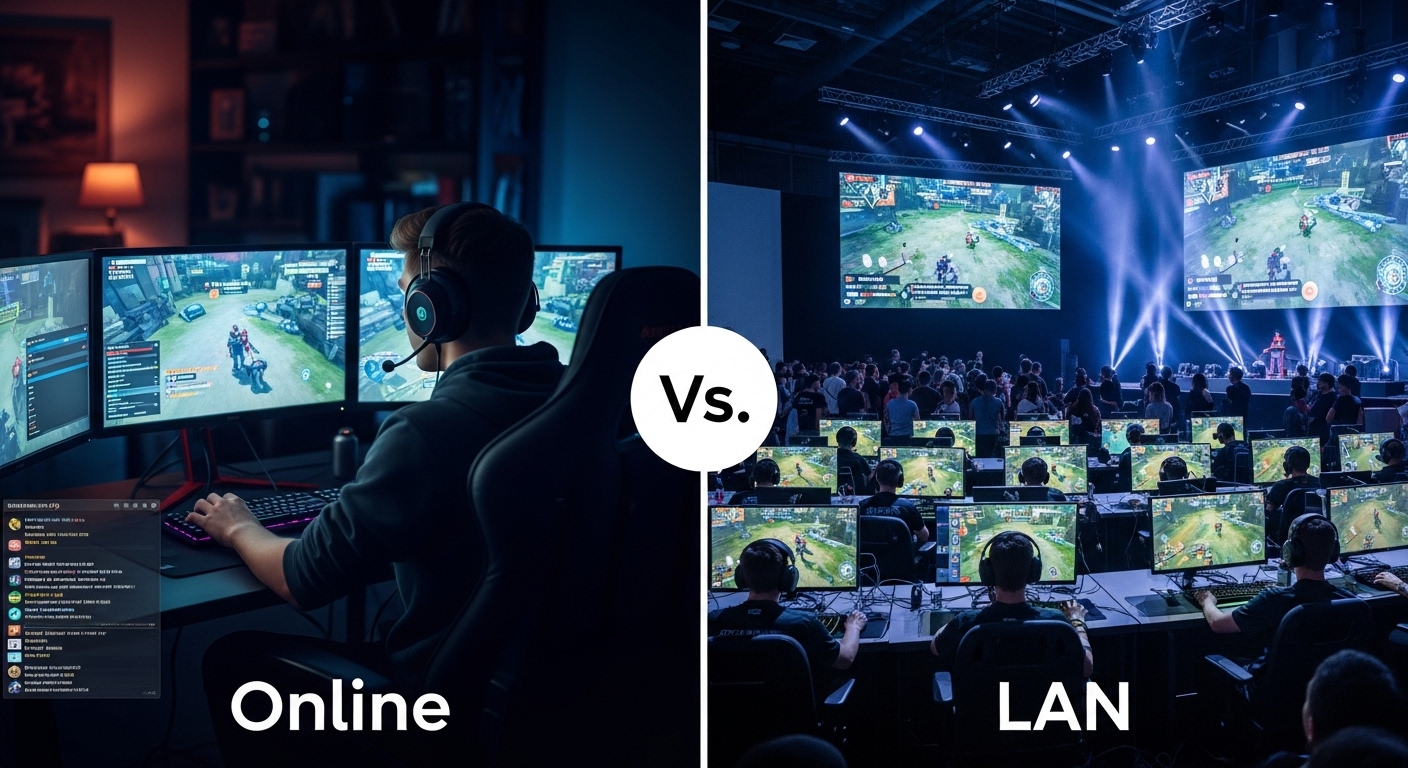
Esports has grown into a global industry, transforming video games from a casual hobby into a competitive spectacle with millions of fans, professional teams, and multi-million-dollar prize pools. At the heart of competitive gaming are tournaments, the battlegrounds where players prove their skills, organizations showcase their talent, and fans gather to witness thrilling matches. These tournaments generally take place in two formats: online tournaments and LAN (Local Area Network) tournaments.
While both serve as essential pillars in esports, they differ significantly in terms of setup, competition environment, fan experience, and impact on players. The debate between online and LAN tournaments has existed since the early days of competitive gaming, and as the industry evolves, the discussion becomes more relevant than ever.
So, the question stands: Which is better — online tournaments or LAN tournaments? Let’s dive deep into the pros, cons, and nuances of both to find out.
1. The Basics: Understanding Online and LAN Tournaments
Before comparing, it’s important to define what each type of tournament is.
Online Tournaments
Online tournaments are hosted virtually. Players compete from their own locations—be it their homes, team houses, or gaming facilities—by connecting through the internet. They’ve become extremely common due to their accessibility and low logistical costs. With the right infrastructure, online tournaments can connect players across countries and continents.
LAN Tournaments
LAN tournaments, short for Local Area Network tournaments, involve players gathering at a single physical venue and connecting their devices to the same local network. This format ensures minimal latency and creates a controlled environment. LANs have traditionally been seen as the “gold standard” of esports, offering unmatched competitive integrity and live fan experiences.
2. The Rise of Online Tournaments
Online tournaments became especially important during the COVID-19 pandemic, when physical gatherings were restricted. Major esports leagues like the League of Legends Championship Series (LCS), Overwatch League (OWL), and CS:GO Majors temporarily shifted online. This not only kept esports alive during difficult times but also highlighted the adaptability of the industry.
Even outside of global crises, online competitions have always played a role in grassroots and semi-professional scenes. Platforms like Faceit, Battlefy, and ESL Play allow aspiring players to compete in weekly or monthly online tournaments. These serve as stepping stones for players aiming to break into professional esports.
3. The Legacy of LAN Tournaments
LAN tournaments have been around since the early days of competitive gaming in the 1990s, with iconic events like QuakeCon and DreamHack leading the charge. The rise of Counter-Strike 1.6, StarCraft: Brood War, and Warcraft III cemented LANs as the ultimate test of skill.
In today’s esports ecosystem, LANs are often associated with prestige. Events like The International (Dota 2), League of Legends Worlds, and CS:GO Majors attract tens of thousands of fans in stadiums and millions of viewers online. For many players, lifting a trophy at a LAN event represents the peak of their careers.
4. Advantages of Online Tournaments
Let’s explore why online tournaments have become such a crucial part of modern esports.
4.1 Accessibility
Online tournaments break down geographical barriers. Players from smaller regions without established esports infrastructure can still participate and showcase their skills. This inclusivity fuels talent discovery worldwide.
4.2 Cost-Effectiveness
Organizing a LAN requires renting a venue, setting up high-end equipment, arranging accommodations, and managing logistics. Online tournaments eliminate most of these expenses, making them more budget-friendly for organizers and players alike.
4.3 Larger Participation Pools
Because travel isn’t required, more teams and individuals can participate. This is especially beneficial in amateur or semi-pro scenes where financial limitations could prevent players from attending LANs.
4.4 Flexibility
Online events can be scheduled more frequently, covering short seasonal competitions, qualifiers, or even experimental formats. This flexibility keeps the competitive ecosystem active throughout the year.
4.5 Developmental Ground for New Players
Online tournaments often serve as proving grounds. Rising stars can make names for themselves in online circuits before stepping onto the grand LAN stages.
5. Disadvantages of Online Tournaments
While convenient, online events come with drawbacks.
5.1 Internet Dependency
The biggest challenge is internet stability. Latency, packet loss, or disconnections can drastically affect gameplay, sometimes even costing teams matches.
5.2 Regional Limitations
Though online tournaments are technically global, most restrict participation to specific regions due to ping disparities. A player in Europe competing against one in North America would face significant delays, making the match unfair.
5.3 Competitive Integrity Concerns
Cheating is a persistent concern in online play. Players are not under direct supervision, leaving room for potential exploits, unauthorized software, or even coaching abuses during games.
5.4 Limited Fan Engagement
Online tournaments lack the energy of live crowds. Fans may watch streams, but the electric atmosphere of stadiums and cheering audiences is absent.
5.5 Reduced Prestige
Winning an online tournament, while valuable, does not carry the same weight or prestige as lifting a trophy in front of thousands of fans at a LAN.
6. Advantages of LAN Tournaments
LAN tournaments continue to be the pinnacle of esports for several reasons.
6.1 Minimal Latency
Because all players are connected via a local network, lag is virtually eliminated. Matches are played on equal footing, ensuring pure skill determines the outcome.
6.2 Unmatched Atmosphere
The live audience, roaring cheers, and immersive stage setups create unforgettable experiences for both players and fans. This energy often pushes players to perform at their absolute peak.
6.3 Stronger Competitive Integrity
At LANs, strict supervision, anti-cheat measures, and referee presence reduce the possibility of foul play. Players compete under standardized conditions, reinforcing fairness.
6.4 Global Prestige
LAN tournaments represent the highest level of competition. Winning a major LAN can elevate a player’s career, attract sponsorships, and cement their legacy in esports history.
6.5 Networking Opportunities
LANs bring together players, teams, coaches, sponsors, and media. This face-to-face interaction strengthens community ties and fosters long-term growth of the industry.
7. Disadvantages of LAN Tournaments
Despite their prestige, LANs also have downsides.
7.1 High Costs
LAN tournaments require massive budgets. Venue rentals, production crews, travel, accommodation, and prize pools can cost millions, limiting the number of events each year.
7.2 Logistical Challenges
International LANs involve visa approvals, travel arrangements, and time zone adjustments. Any delay can disrupt schedules and negatively affect players’ performance.
7.3 Limited Accessibility
Not every aspiring player can attend LANs due to financial or geographical constraints. This can create exclusivity, limiting opportunities for grassroots competitors.
7.4 Pressure on Players
The intensity of performing live in front of thousands can overwhelm less experienced players. Online matches allow players to compete in more comfortable, familiar environments.
8. Fan Experience: Online vs. LAN
Fans are the backbone of esports. How do these formats impact their experience?
- Online Tournaments: Fans enjoy accessibility. They can tune in from anywhere, often for free, with broadcasts available on platforms like Twitch and YouTube. However, the lack of live audience interaction reduces excitement.
- LAN Tournaments: Attending a LAN is akin to watching the Super Bowl or the World Cup. The energy, chants, and visual production make it unforgettable. Yet, traveling to venues can be expensive and limited to certain regions.
9. Player Perspective: Online vs. LAN
For players, both formats offer unique challenges.
- Online Play: More comfortable but sometimes frustrating due to connectivity issues. Players perform in familiar setups but might face distractions at home.
- LAN Play: Intimidating but also exhilarating. Many professionals claim they play their best under the spotlight, while others struggle with nerves.
10. The Hybrid Model: Bridging the Gap
Increasingly, esports organizers are adopting hybrid approaches. For example, online qualifiers determine which teams advance to prestigious LAN finals. This balances accessibility with competitive integrity.
Events like Dota Pro Circuit (DPC) and League of Legends Worlds use this model successfully. It allows grassroots participation while reserving the grand stage for the best teams.
11. The Role of Technology
Advancements in internet infrastructure, cloud gaming, and anti-cheat software may narrow the gap between online and LAN experiences. With 5G networks and advanced server technology, latency issues might soon become less problematic, making online play more reliable.
12. Which Is Better?
The answer isn’t simple—it depends on perspective.
- For Organizers: Online tournaments are cost-efficient and scalable, while LANs build brand prestige and fan engagement.
- For Players: Online tournaments are accessible training grounds, but LANs provide career-defining opportunities.
- For Fans: Online streams offer convenience, but nothing matches the energy of a LAN arena.
Ultimately, LAN tournaments are considered “better” for competitive integrity and prestige, while online tournaments excel in accessibility and growth of the scene. Both are indispensable to the ecosystem.
13. Conclusion
The esports industry thrives because of the balance between online and LAN tournaments. Online events fuel grassroots participation, discover new talent, and keep fans engaged year-round. LANs, on the other hand, represent the pinnacle of competition, delivering unforgettable spectacles and defining champions.
Instead of asking “Which is better?” perhaps the real question should be: How can we make both formats complement each other to strengthen esports as a whole?